

Content Marketing vs. Paid Advertising: Which Delivers Better ROI for Your Business?
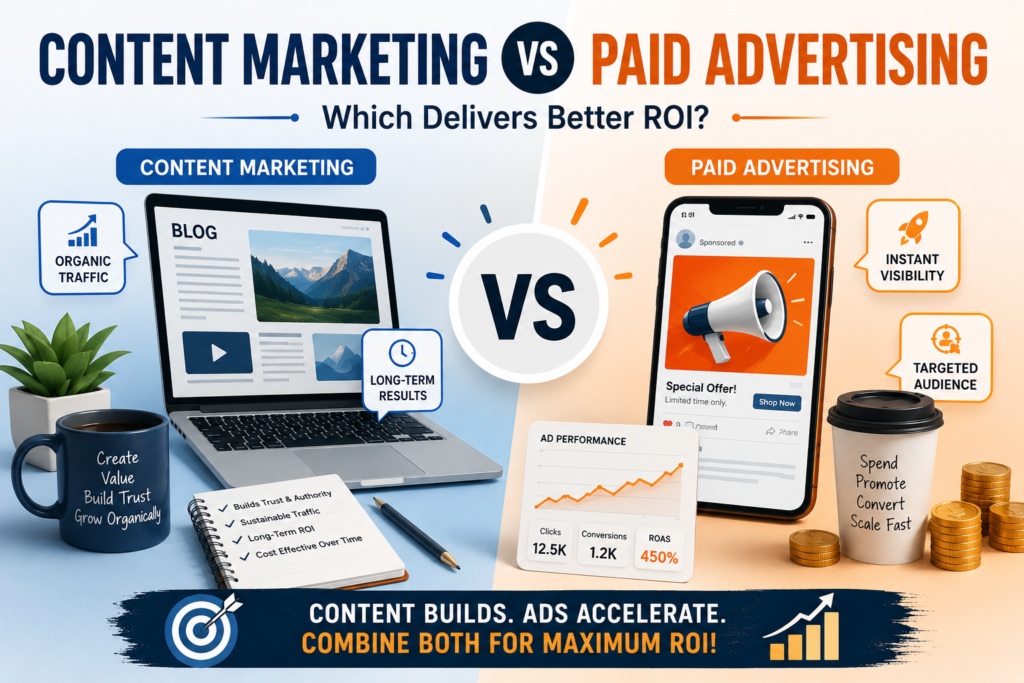
When it comes to growing a business online, one question comes up repeatedly: Content Marketing vs. Paid Advertising – which delivers better ROI? Both strategies can help businesses generate leads, increase brand awareness, and drive sales. However, they work in very different ways and offer unique advantages depending on your goals, budget, and timeline. Some businesses invest heavily in paid ads to get instant visibility, while others focus on creating valuable content that attracts customers organically over time. The truth is, there isn’t a one-size-fits-all answer. In this guide, we’ll compare content marketing and paid advertising, explore their benefits and challenges, and help you determine which strategy provides the best return on investment (ROI) for your business. What Is Content Marketing? Content marketing is a long-term digital marketing strategy focused on creating valuable and relevant content to attract and engage your target audience. Instead of directly promoting products or services, content marketing provides useful information that helps potential customers solve problems or answer questions. Common Types of Content Marketing For example, a fitness company might publish blog posts about workout routines, healthy eating tips, and fitness goals. Over time, this content attracts visitors who may eventually become customers. The primary goal of content marketing is to build trust, authority, and long-term relationships with your audience. What Is Paid Advertising? Paid advertising involves paying platforms to display your promotional content to a targeted audience. Unlike content marketing, paid ads provide immediate visibility and can generate traffic almost instantly. Popular Paid Advertising Channels For example, a local restaurant can run Facebook ads promoting a special discount and start receiving customer inquiries within hours. Paid advertising focuses on delivering quick results by placing your business directly in front of potential customers. Content Marketing ROI: Why Many Businesses Invest for the Long Term One of the biggest advantages of content marketing is its ability to generate sustainable results over time. 1. Creates Long-Term Organic Traffic A well-written blog post can continue attracting visitors months or even years after publication. Unlike paid ads that stop producing results once your budget runs out, quality content remains available and continues generating traffic. This makes content marketing a valuable long-term asset. 2. Builds Trust and Authority Modern consumers prefer researching products and services before making purchasing decisions. When your business consistently publishes helpful content, customers begin viewing your brand as a trusted source of information. Trust often leads to higher conversion rates and customer loyalty. 3. Improves Search Engine Rankings Search engines reward websites that publish high-quality, relevant content. By targeting valuable keywords and answering user questions, content marketing can improve your SEO performance and increase organic visibility. More rankings mean more traffic and more opportunities to generate leads. 4. Lower Cost Per Lead Over Time Although content creation requires an initial investment, the cost per lead often decreases as content continues attracting visitors. Many businesses find that content marketing becomes more cost-effective the longer they maintain their strategy. Challenges of Content Marketing While content marketing offers impressive long-term ROI, it’s important to understand its limitations. Results Take Time Unlike paid advertising, content marketing is not an instant solution. It may take several months before you see significant traffic and conversions. Consistency Is Essential Successful content marketing requires regular publishing, keyword research, content optimization, and promotion. Businesses that stop creating content often see slower growth. Competition Can Be High Many industries are already producing content, making it necessary to create higher-quality and more valuable resources to stand out. Paid Advertising ROI: Why Businesses Choose Fast Results Paid advertising remains one of the fastest ways to drive traffic and generate leads. 1. Immediate Visibility One of the biggest advantages of paid advertising is speed. As soon as your campaign goes live, your ads can appear in front of thousands of potential customers. This makes paid advertising ideal for product launches, promotions, and time-sensitive campaigns. 2. Highly Targeted Audience Reach Modern advertising platforms offer advanced targeting options. You can target users based on: This level of precision helps businesses reach the right audience at the right time. 3. Predictable and Scalable Results With proper optimization, paid advertising campaigns can produce consistent results. If a campaign performs well, businesses can increase their budget to generate more leads and sales. This scalability makes paid advertising attractive for growth-focused companies. 4. Easy Performance Tracking Paid advertising platforms provide detailed analytics. You can track: This data allows marketers to make informed decisions and improve campaign performance. Challenges of Paid Advertising Although paid ads can generate fast results, they also come with certain drawbacks. Costs Can Increase Quickly Advertising costs continue rising as competition grows. Businesses may need significant budgets to remain competitive in highly competitive industries. Results Stop When Spending Stops Unlike content marketing, paid advertising delivers results only while campaigns are active. Once your budget is exhausted, traffic and lead generation often stop immediately. Ad Fatigue Can Reduce Performance Audiences may become less responsive when they repeatedly see the same ads. Regular creative updates and campaign optimization are necessary to maintain effectiveness. Content Marketing vs. Paid Advertising: Which Delivers Better ROI? The answer depends on your business goals. Choose Content Marketing If: Choose Paid Advertising If: The Best Strategy: Combine Both Rather than choosing one over the other, many successful businesses use both strategies together. For example: This combination often delivers the strongest overall ROI. Conclusion When comparing Content Marketing vs Paid Advertising, both strategies offer valuable benefits. Content marketing excels at generating long-term organic traffic, building trust, and reducing customer acquisition costs over time. Paid advertising provides immediate visibility, fast lead generation, and precise audience targeting. If you’re looking for sustainable growth and long-term ROI, content marketing is often the better investment. However, if your goal is quick results and immediate visibility, paid advertising can be highly effective. For most businesses, the smartest approach is combining both strategies. By leveraging the strengths of content marketing and paid advertising, you can create a balanced digital marketing strategy that drives both short-term wins
